Article
Dry wood storage methods for Canadian winters
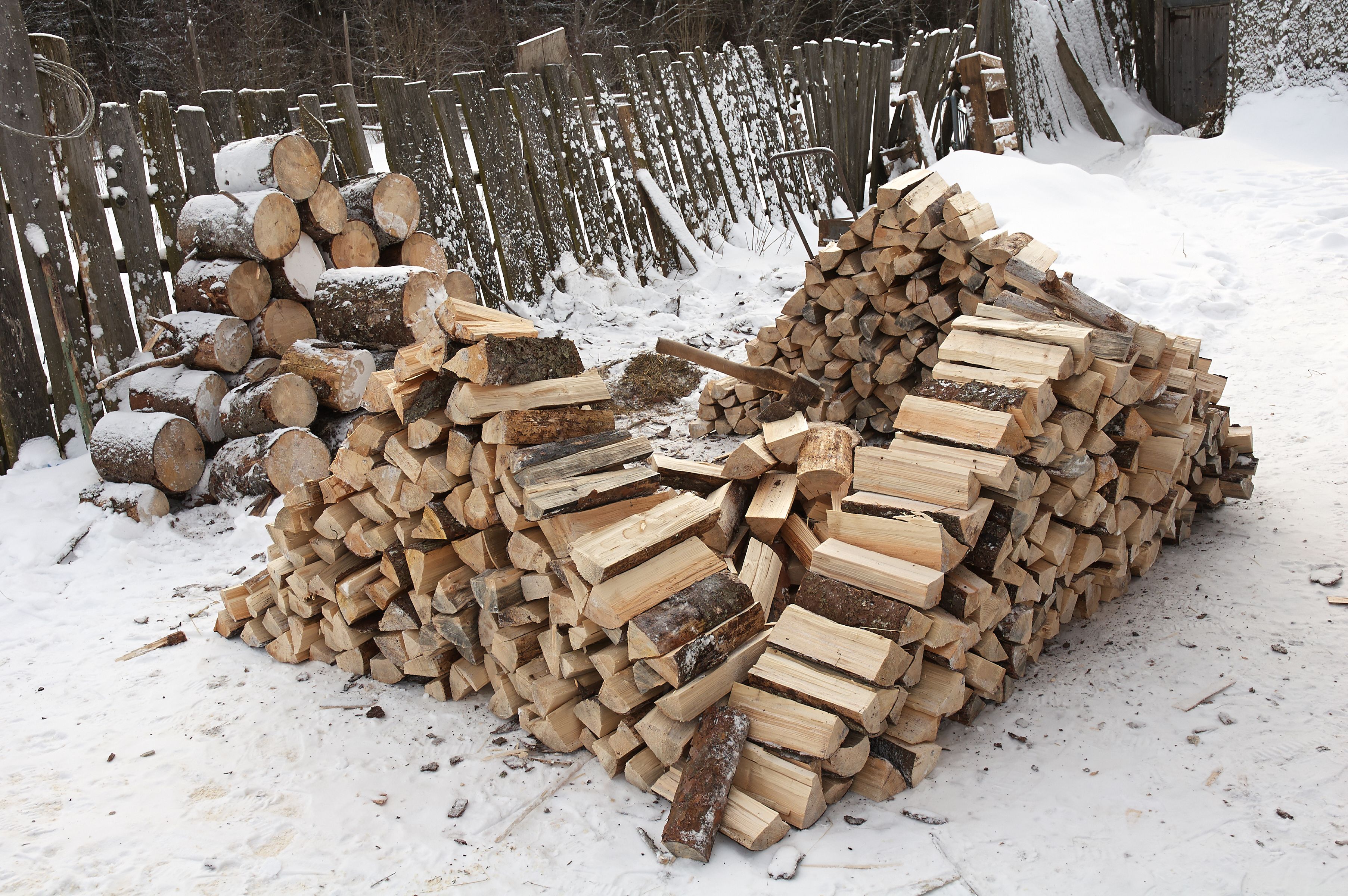
Seasoning gets wood dry; storage keeps it dry. In Canadian winters a pile faces heavy snow, freeze-thaw cycles, wind-driven rain and a spring melt that can soak the bottom of a stack sitting on bare ground. Good storage is mostly about three things: keep the wood off the ground, let air move through it, and shed water off the top while leaving the sides open.
Keep it off the ground
Wood in direct contact with soil wicks up moisture and rots from the bottom. A simple base of pallets, pressure-treated runners, or a row of poles under the pile breaks that contact and lets air reach the lowest pieces. This single step prevents the soggy bottom layer that often spoils otherwise good wood by late winter.
Stack for airflow
A stack needs gaps for air, not pieces jammed solid. Single rows dry faster than wide deep piles because wind can pass through. Where two ends are not supported by a wall, criss-crossed end columns hold the row up and add ventilation at the same time.
- Run rows so prevailing wind and sun reach the long face.
- Leave a hand's width between parallel rows for air movement.
- Keep the pile a stable height; very tall single rows lean and fall.
Cover the top, not the sides
A common mistake is wrapping a whole pile in a tarp. Sealing the sides traps moisture and stops drying. Cover only the top third or so to shed rain and snow, and leave the sides open to the air.
Covering through snow
A purpose-built woodshed with an open front and a solid roof is the most durable answer, since it sheds snow and rain while staying ventilated. Where a shed is not practical, a sheet of metal roofing, a length of board, or a tarp weighted along the top ridge will do, as long as water runs off rather than pooling and the sides stay exposed.
| Method | Strength | Watch for |
|---|---|---|
| Open-front woodshed | Sheds snow, stays ventilated | Build cost and space |
| Top-covered outdoor row | Low cost, dries well | Secure the cover against wind |
| Full tarp wrap | Quick to set up | Traps moisture; avoid for long storage |
Bringing wood indoors
Keep only a few days' worth of wood inside near the appliance. A larger indoor store can carry hitchhiking insects and, in a heated room, can dry the surface enough to invite pests. A small rack by the stove that is refilled from the outdoor pile keeps the burn-ready supply handy without those problems.
Site it sensibly
Place the main pile a reasonable distance from the house wall for airflow and fire safety, while keeping the path short enough that fetching wood in deep snow is not a chore. A cleared, drained spot that gets sun and wind dries far better than a shaded corner against a fence.
Storage only pays off if the wood went in dry; see seasoning times and moisture. Which species you are storing also shapes the plan, covered in hardwood vs softwood.
References
- Natural Resources Canada — residential wood heating information.
- Government of Canada — health and air-quality guidance on burning wood.
- US EPA Burn Wise — storing and handling firewood.